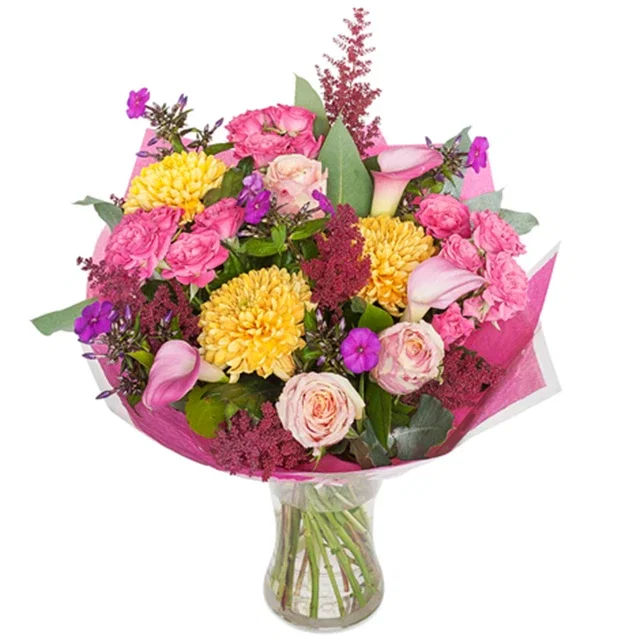
Hydrangeas: Meaning, Colours and How to Keep Them Fresh
Hydrangeas (Hortensien) are big, soft and generous, but thirsty. Learn what they mean, why their colour changes and how to revive a wilted head.

Hydrangeas, called Hortensien in German, are the generous giants of the flower world. One stem can fill a vase with a cloud of blue, pink, white or green petals. They are popular in wedding bouquets, in table arrangements and as garden plants. They are also famously thirsty, so a little know-how goes a long way.
- Meaning: gratitude and heartfelt emotion.
- Biggest risk: wilting, because hydrangeas need lots of water.
- Rescue trick: submerge the whole flower head in cool water.
- Pets: listed as toxic to cats and dogs.
What hydrangeas mean
In the language of flowers, hydrangeas stand for gratitude and deep, heartfelt emotion. Because one flower head is made up of many small blooms, they are also associated with abundance. Blue hydrangeas are sometimes linked with apology and understanding, and white ones with purity and grace, which is why they are a wedding favourite.
Why hydrangeas change colour
With many garden hydrangeas, the soil decides the colour. In acidic soil, the plant can take up aluminium, and the flowers turn blue. In alkaline soil, they stay pink. White hydrangeas usually stay white whatever the soil. Cut hydrangeas keep the colour they had when they were harvested.
How to care for cut hydrangeas
- Cut fresh: trim the stem at a sharp angle and, for woody stems, make a short vertical slit at the bottom to help water uptake.
- Deep water: unlike gerberas, hydrangeas like a deep vase with plenty of cool water.
- Top up daily: they drink a lot, so check the level every day.
- Mist the petals: hydrangeas take in moisture through their petals too.
- Cool spot: away from heaters, direct sun and draughts.
For general tips, read how to make cut flowers last longer.
Drying hydrangeas
Hydrangeas dry beautifully, especially towards the end of summer when the petals become papery. Leave them in a vase with a few centimetres of water and let it evaporate slowly, or hang them upside down in a dry, dark place. Dried hydrangeas keep their shape for months and make lovely autumn decorations.
Styling hydrangeas
- On their own: one or three heads in a simple vase look generous and calm.
- In mixed bouquets: they add volume around roses and carnations. See mixed flowers.
- On the table: low and lush, perfect for centrepieces. See table flower ideas.
- At weddings: white and blush hydrangeas are a classic. See our wedding flowers guide.
Hydrangeas and pets
Hydrangeas are listed as toxic to cats and dogs. Keep vases out of reach and contact your vet if your pet has eaten any part of the plant. Read pet-safe flowers for alternatives.
Related reading
Frequently Asked Questions
Hydrangeas are traditionally linked with gratitude and heartfelt emotion. Blue hydrangeas are sometimes associated with apology and understanding.
Hydrangeas are very thirsty and also take in water through their petals. Recut the stem and submerge the whole head in cool water for a while to revive it.
For many garden hydrangeas, the colour depends on the soil. Acidic soil tends to produce blue flowers and alkaline soil pink ones.
Usually about a week with good care, sometimes longer.
Hydrangeas are listed as toxic to cats and dogs. Keep them out of reach and contact your vet if your pet eats any.
Yes. Hydrangeas dry well. Leave them in a vase with a little water and let it evaporate slowly, or hang them upside down somewhere dry.
Shop related products
Flowers and gifts that go with this article. Delivery is a flat €7 anywhere in Germany.
 Magnificent Elegance - Lovely Pink White BouquetEUR 220
 Sunrise Song FAEUR 142
 Summer FeelingEUR 79
 Cheerful mixed flowers Best wishesEUR 83